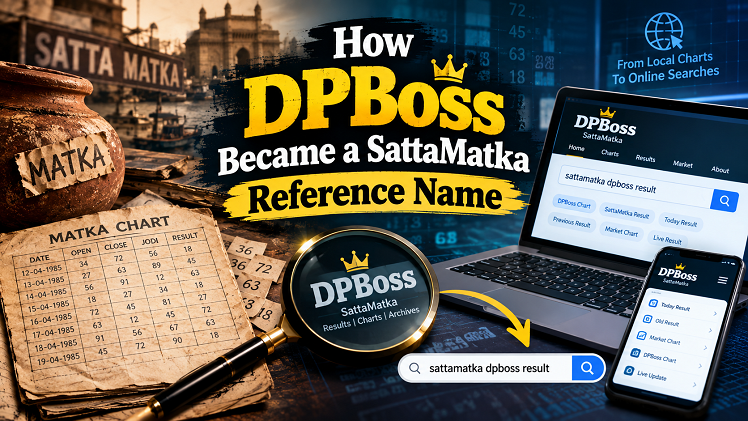
The growth of the internet has changed the way people discover information about traditional number-based betting systems in India. Terms that were once associated mainly with local markets, printed papers, and word-of-mouth communication are now commonly searched online. Among the names frequently associated with this online ecosystem is DPBoss, which has become a recognizable reference term in discussions surrounding SattaMatka and historical result information.
Understanding how DPBoss developed into a reference name requires looking at the broader transition from traditional record keeping to digital information sharing.
From Local Charts to Online Information
SattaMatka developed as a largely offline activity, particularly in parts of Mumbai and other urban areas. Before smartphones and websites became widespread, information about results was commonly exchanged through local contacts, handwritten records, printed charts, and public notices.
This system had obvious limitations. People depended on physical locations or specific individuals to obtain information, while older records could be difficult to access. The arrival of the internet gradually changed this process by making numerical information available through websites and online archives.
As more people began searching for Matka-related information online, certain names and terms became strongly associated with the search experience. DPBoss emerged within this environment as a commonly recognized reference name.
Why DPBoss Became Recognizable
One reason a reference name becomes well known online is consistency. When users repeatedly encounter the same terminology, formatting, market names, or chart structures across different sources, the name can become part of the vocabulary surrounding a particular subject.
DPBoss became associated in online discussions with SattaMatka charts, market information, and historical result references. Over time, people searching the web began using related phrases to find information, creating a strong connection between the term and the wider SattaMatka information ecosystem.
Search behavior also plays an important role. Internet users often rely on familiar keywords when looking for specific types of information. A phrase such as sattamatka dpboss result can therefore function as a search reference for people trying to locate historical or regularly updated Matka-related information online.
The Role of Digital Charts
One major development in this transition has been the digital chart. Online charts allow large quantities of historical information to be organized in tables rather than scattered across notebooks or individual documents.
A typical digital chart may organize information by date, market, and numerical result. This format makes it easier to search for previous entries and compare information from different time periods.
The popularity of names such as DPBoss is closely connected to this evolution in presentation. Rather than depending entirely on local paper records, users can increasingly explore information through websites and searchable online pages.
DPBoss and Online Search Culture
Another important factor behind the recognition of DPBoss is the growth of search-driven internet culture. People often type specific phrases into search engines based on the terminology they have encountered previously.
This creates a cycle in which familiar names become increasingly visible. Once a term is widely used, publishers and website owners may include it in titles, descriptions, articles, and navigation pages to help readers understand the material being presented.
In this sense, DPBoss is not simply a name associated with one page or one chart format. It has become part of a broader online vocabulary used when discussing SattaMatka-related information.
Historical Records and Verification
As digital archives become more common, the importance of accurate record keeping also increases. Historical information can be copied between websites, reformatted, or entered manually, which means discrepancies can sometimes appear between different sources.
Readers should therefore distinguish between historical records and claims about future outcomes. Previous numerical results are records of past events and should not be treated as reliable methods for predicting future results.
Responsible information sources should also make it clear when content represents historical data, current reporting, or user-generated material. Clear labeling can help readers understand what they are viewing and reduce confusion.
The Continuing Evolution of SattaMatka References
The story of DPBoss reflects a much larger transformation in how traditional information is distributed. What once depended on paper charts, local networks, and physical record books can now be found through searchable websites and digital archives.
As online publishing continues to evolve, familiar reference names may remain important because they help users navigate a large amount of scattered information. At the same time, readers benefit from checking dates, comparing records, and understanding the difference between documented historical information and promotional claims.
DPBoss has therefore become a recognizable reference name within the online SattaMatka discussion, illustrating how technology can transform a traditional, locally distributed information system into a searchable digital subject.